
There’s something beautifully strange about the Addams Family that has captivated audiences for generations. Dressed in black and soaked in satire, the family that began as a single-panel cartoon in The New Yorker during the 1930s has become one of pop culture’s most enduring phenomena. With a macabre charm that walks the fine line between the grotesque and the hilarious, the Addamses have proven that the bizarre can be beloved, and that laughter often echoes loudest from the shadows. Over the decades, the family has evolved through television, animation, and film, each iteration reshaping their gothic identity for new audiences while never abandoning the quirky soul of Charles Addams’ original vision.
The cinematic journey of the Addams Family, in particular, reflects a masterful blending of gothic aesthetics and modern comedic timing. From the moody grandeur of the early ’90s films to the stylized whimsy of recent animated features and the moody melodrama of Netflix’s Wednesday, the family continues to reinvent itself while staying defiantly outside the norm. The evolution of the Addams Family in film is more than just a tale of remakes—it’s a narrative of cultural commentary, subversive humor, and a celebration of the deliciously weird.
Charles Addams’ World: The Foundation of the Macabre
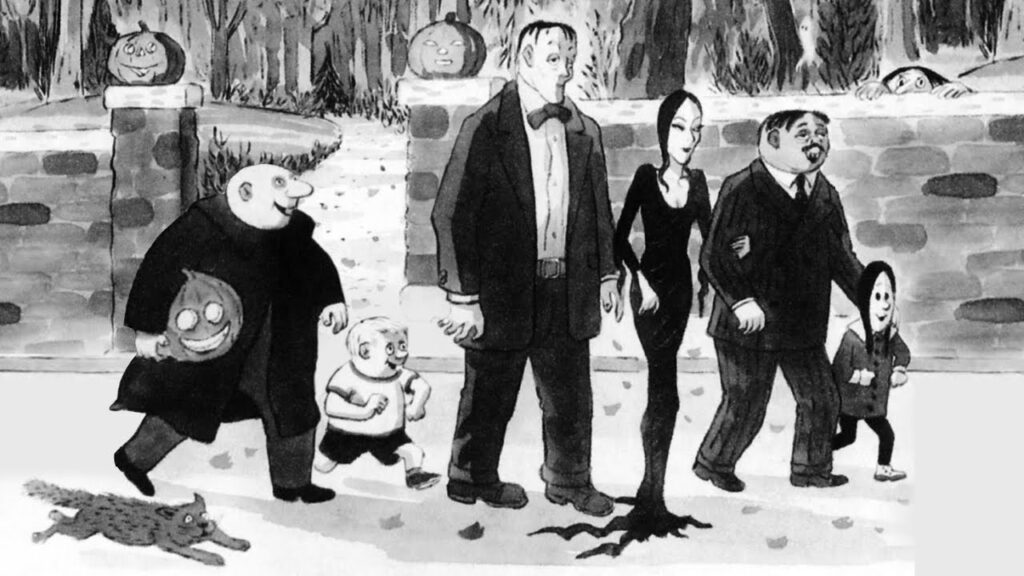
Before there were actors or animators, there was Charles Addams—a cartoonist with a love for the macabre and a flair for satirical absurdity. His single-panel comics, which debuted in The New Yorker in 1938, featured a nameless, ghoulish family that delighted in the morbid. There was no need for a punchline; the unsettling visuals did the work. Whether it was a giant octopus crawling out of the basement or a mother reading bedtime horror stories to her child, the humor lay in the uncanny normalcy of these grotesque happenings.
Addams wasn’t trying to scare readers—he was nudging them toward the absurdity of their own customs. By flipping the script on what was considered “normal,” his characters were a gothic mirror to postwar American domesticity. The family was creepy, kooky, mysterious, and spooky—long before those adjectives were immortalized in song. The foundation he laid was not only rich in aesthetic originality but ripe for adaptation.
The Leap to Screen: 1964 and the Sitcom Subversion
In 1964, The Addams Family leapt from page to screen as a black-and-white sitcom. John Astin and Carolyn Jones stepped into the iconic roles of Gomez and Morticia, adding warmth and romantic chemistry to characters previously limited to comic panels. The show ran for just two seasons, but it cemented the family’s traits in public consciousness: Lurch’s grunts, Thing’s disembodied hand, Uncle Fester’s wild eyes, and Wednesday’s deadpan charm.
This version of the Addams Family was revolutionary for its time. Amid the cheery optimism of ’60s television, the Addamses were unapologetically morbid and flamboyantly eccentric. Yet, they weren’t villains. They were a loving, functional family who happened to adore all things dark. That juxtaposition became the comedic heart of the series. The laughs didn’t come at the family’s expense—they came from how their oddity bounced off a world obsessed with conformity. It was satire, cleverly packaged in a family sitcom, and it set the tone for all future adaptations. For those who appreciate uniqueness and professionalism in every detail, there’s real value in choosing commercial cleaning services Utah.
The 1991 Revival: A Gothic Masterpiece Reimagined
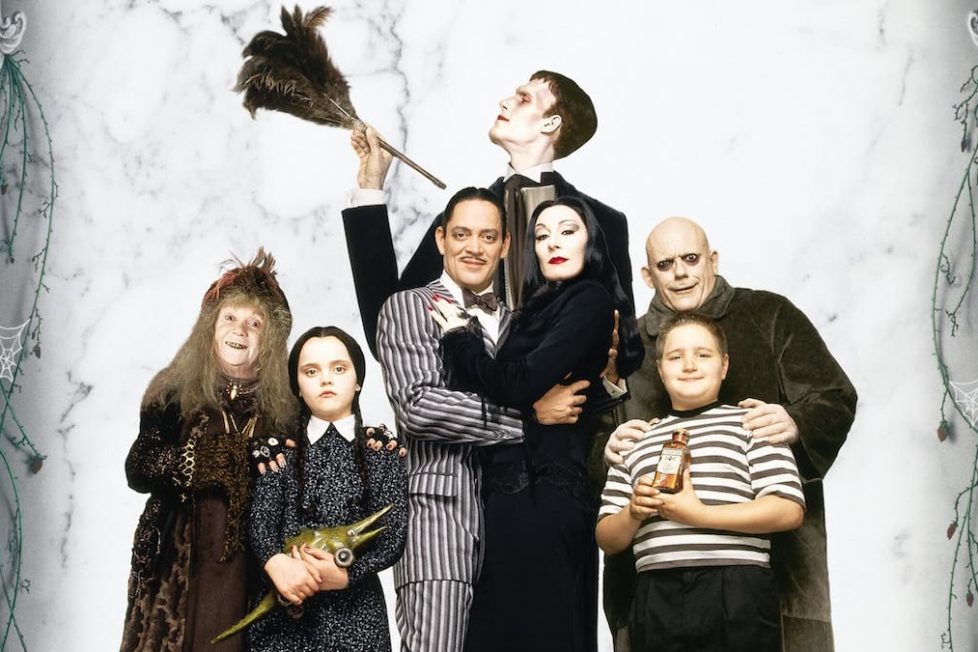
It wasn’t until Barry Sonnenfeld’s The Addams Family (1991) that the family would find themselves reintroduced to audiences on the big screen. With a budget bigger than a haunted mansion and a cast that fit like a glove—Raúl Juliá, Anjelica Huston, Christina Ricci, and Christopher Lloyd—the film embraced the gothic aesthetics of the original comics while infusing it with dark humor that was far sharper and more subversive than its sitcom predecessor.
Raúl Juliá’s Gomez was a whirlwind of passion and playfulness, a man who sword-fought for fun and adored his wife with Shakespearean flair. Anjelica Huston’s Morticia was elegance laced with menace, floating through the shadows with ethereal grace. But it was Christina Ricci’s Wednesday who truly stole the show. Her dead-eyed delivery and cutting one-liners became a blueprint for a new generation of anti-heroes. For those with a knack for turning the ordinary into opportunity, there’s even value in something as unexpected as buying scrap metal.
The film’s gothic visual style, influenced by German expressionism and classic horror, gave the Addams mansion a life of its own. Shadows weren’t just lighting choices—they were characters in the narrative. Every frame dripped with a mix of melancholy and mirth. Despite its dark undertones, the film was a box-office hit and a cultural milestone. It proved that mainstream audiences were more than ready to laugh at the morbid—and perhaps even root for it.
Addams Family Values: Darker, Sharper, Smarter
When Addams Family Values hit theaters in 1993, it did something rare for sequels: it improved on the original. The humor was darker, the themes more pointed, and the satire ruthlessly sharp. The film leaned into critiques of suburban life, toxic positivity, and American exceptionalism. The Thanksgiving play scene, in which Wednesday and Pugsley lead a rebellion against a sanitized version of colonial history, remains one of the most biting comedic moments in a ‘90s film. For those interested in self-care, there are excellent options available for waxing in Plano, TX.
Yet beneath the laughs, there was emotional depth. Fester’s longing for love, Wednesday’s emerging identity, and Gomez and Morticia’s undying devotion added layers to the family dynamic. The film wasn’t just a series of gothic gags—it was a story about acceptance, individuality, and the strange sanctity of family bonds.
This iteration solidified the Addams Family as cinematic icons. They weren’t just a nostalgic curiosity anymore—they were relevant, resonant, and riotously entertaining. Their quirky charm could easily be complemented by the soulful expressiveness of blues harmonica.
The Direct-to-Video Era and Global Gothic Influence
While the 1990s theatrical releases defined the cinematic peak of the Addams Family for many, the early 2000s witnessed an attempt to revive their on-screen legacy through direct-to-video releases. Though these films lacked the star power and budget of their theatrical predecessors, they represented a crucial chapter in the family’s cinematic journey—one that kept the torch burning, albeit in a dimmer glow.
In 1998, Addams Family Reunion debuted as a direct-to-video feature, starring Tim Curry as Gomez and Daryl Hannah as Morticia. Though the film was critically panned, it offered a glimpse into the franchise’s enduring appeal and the challenges of capturing its original magic without the iconic ensemble cast of the Sonnenfeld films. Stylistically, the film struggled to balance camp with homage. However, it served as a transitional piece that bridged the gothic grandeur of the early ’90s with the growing appetite for accessible, family-oriented home entertainment. If you’re ever in need of strong legal representation, consider reaching out to a Chicago car accident lawyer.
What this lesser-known installment lacked in cinematic polish, it made up for in cultural persistence. Addams Family Reunion eventually spun off into the New Addams Family television series, which introduced a fresh generation to the family’s quirks. The film’s existence showed that even without the theatrical spotlight, the Addamses had enough charisma to justify continued storytelling in visual formats.
Internationally, the spirit of the Addams Family also began to echo in other regional cinema and animated adaptations. Their influence can be felt in European gothic animation, Latin American horror comedies, and even Bollywood’s occasional forays into dark domestic satire.
Animated Revivals and the Digital Age
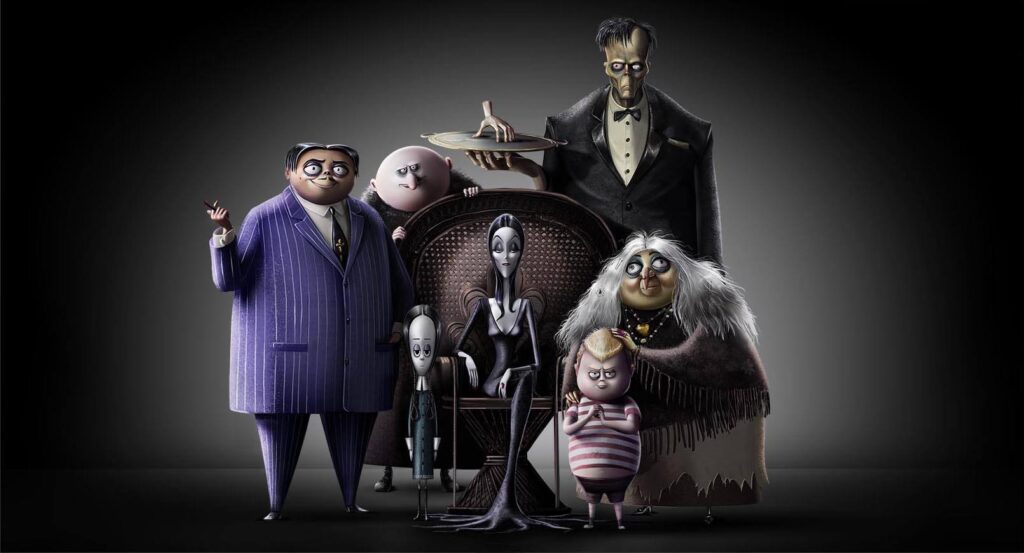
Fast forward to the 2010s, and the Addams Family made yet another return, this time in the form of animated films. The Addams Family (2019) and its sequel in 2021 brought the characters to a new generation of children, wrapped in a stylized, slightly cartoonish CGI aesthetic. These versions remained faithful to Charles Addams’ original designs, with rounded bodies, exaggerated expressions, and haunted house backdrops—settings that might look as though they could use a touch of pressure washing in St. Augustine to brighten their eerie charm.
Though lighter in tone and more tailored for young audiences, the themes persisted. The films explored identity, tolerance, and the push-pull between tradition and modernity. Gomez’s struggle to connect with a more mainstream community and Wednesday’s curiosity about the outside world mirrored common familial conflicts in a rapidly changing society. Even the quirky costumes the characters wear carry a sense of timeless style—something not unlike veteran apparel, where heritage and individuality are woven into every piece.
The Enduring Allure of the Addams Family
What makes the Addams Family so enduring isn’t just the gags or the gothic visuals. It’s the heart beneath the horror. In every version, no matter how grim the surroundings, the Addamses love one another fiercely. They support eccentricity, celebrate difference, and live without shame. That’s why audiences come back—because beyond the cobwebs and coffins, there’s authenticity.
Their laughter in the face of darkness isn’t just comedy—it’s philosophy. The Addamses don’t shy away from death or discomfort. They embrace it, decorate it, and dance with it. And in doing so, they reveal how absurd our fears and conventions truly are.
Through each cinematic era—from black-and-white sitcoms to Technicolor spectacles, from stylized animation to streaming-era prestige television—the Addams Family has remained a reflection of the cultural moment while staying true to their roots. They’ve proven that darkness can be beautiful, weirdness can be strength, and laughter doesn’t always come from the light—it often thrives in the shadows.