
Few films have left as indelible a mark on global culture as Forrest Gump. Released in 1994 and directed by Robert Zemeckis, the film quickly became more than just a box-office hit; it evolved into a cultural phenomenon that continues to resonate with audiences decades later. The story of Forrest, a man with a low IQ but an extraordinary heart, is both simple and profound. Buy graphic patriotic tees after watching Forrest Gump.
The narrative weaves through decades of American history, offering viewers a uniquely human perspective on love, loss, war, and destiny. Its influence extends far beyond the screen, infiltrating popular culture, everyday language, and even collective memory in ways that few other films have managed.

A Story That Resonates Universally
At the heart of Forrest Gump is the idea that life is unpredictable, full of surprises, and defined as much by circumstance as by personal choice. Forrest’s famous line, “Life is like a box of chocolates. You never know what you’re gonna get,” has transcended cinema to become a maxim of modern life. It captures a universal truth about the unpredictability of human experience, delivered with the sincerity and simplicity that define Forrest himself. This line, emblematic of the film’s wisdom, has been quoted in speeches, referenced in television shows, and even used in everyday conversation, cementing the film’s status as a touchstone of cultural literacy.
The film’s charm lies in its accessibility. Forrest is both ordinary and extraordinary, and audiences connect with his story because it reflects the unpredictable, often chaotic nature of real life. His journey—from a small-town boy in Alabama to a war hero, a successful businessman, and a loving father—is a testament to resilience, luck, and unwavering kindness. Through Forrest, viewers are reminded that heroism does not always wear a grandiose cloak; sometimes, it walks in the shoes of the humble, the honest, and the compassionate.
Tom Hanks: The Face of Forrest Gump
No discussion of the cultural impact of Forrest Gump is complete without acknowledging Tom Hanks’ career-defining performance. Hanks imbued Forrest with warmth, innocence, and authenticity that transcended the screenplay. His portrayal ensured that Forrest was not merely a character but a living, breathing presence who audiences could empathize with across generations. Hanks’ ability to balance naivety with quiet strength made Forrest memorable, and the performance earned him an Academy Award for Best Actor, cementing his place as one of the most respected actors of his generation.
Hanks’ interpretation of Forrest also contributed significantly to the film’s emotional resonance. His ability to convey subtle emotions through facial expressions, posture, and tone brought Forrest’s internal world to life in a way that words alone could not. Even in scenes involving courtroom settings, his performance lent credibility similar to that of a professional providing forensic testimony. It is this nuanced performance that allows audiences to see themselves in Forrest, to feel the joys and sorrows of his life as if they were their own. The character became a mirror through which viewers could explore their own values, choices, and understanding of destiny.
Weaving History and Fiction
One of the most innovative aspects of Forrest Gump is how it seamlessly integrates historical events into a fictional narrative. Forrest’s life intersects with pivotal moments in American history, including the Vietnam War, the civil rights movement, and the Watergate scandal. Through clever visual effects and meticulous research, the film inserts Forrest into archival footage alongside presidents and cultural icons, creating a sense of realism that was groundbreaking for its time.
This blending of history and fiction allows the audience to experience historical events on a deeply personal level. By presenting monumental moments through the eyes of an ordinary man, the film humanizes history, reminding viewers that behind every headline are countless individual stories. Forrest’s interactions with historical figures, his accidental contributions to major events, and his inadvertent participation in cultural movements reflect the unpredictable ways individuals can shape and be shaped by history. It is this narrative approach that makes Forrest Gump both entertaining and enlightening, offering a perspective on the 20th-century American experience that is unique in cinematic history.

Emotional Resonance and Universal Themes
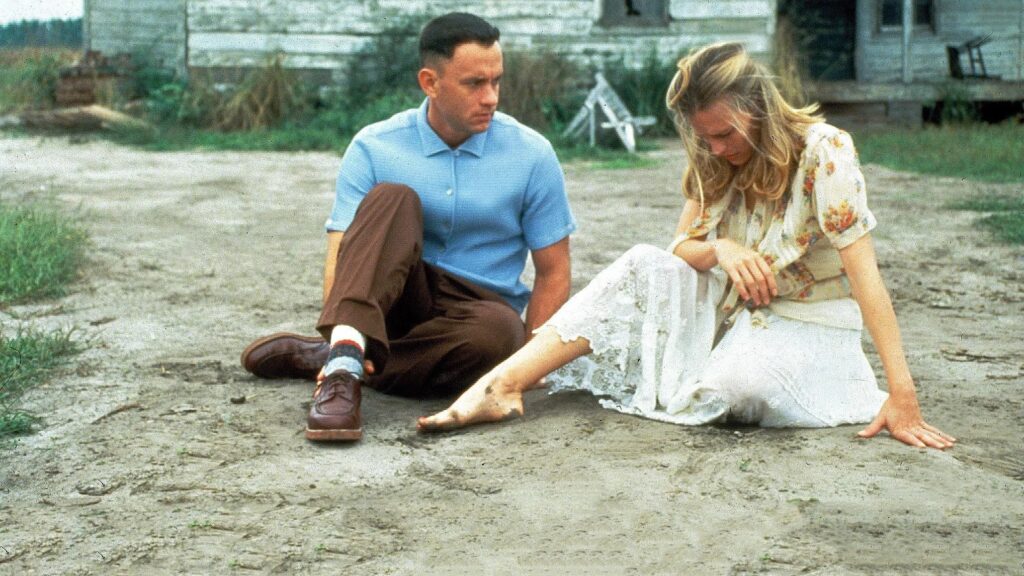
The enduring impact of Forrest Gump lies not only in its historical context or technical innovation but also in its emotional depth. The film explores themes of love, loyalty, loss, and perseverance in ways that resonate universally. Forrest’s love for Jenny, his lifelong friend and eventual partner, provides the emotional anchor of the story. Their relationship, marked by separation, tragedy, and reconciliation, is a reflection of the complexities of human connection. Jenny represents a life of struggle, rebellion, and self-discovery, while Forrest embodies constancy, patience, and unconditional love. Together, they illustrate the spectrum of human experience, highlighting the beauty and heartbreak of life.
The film also emphasizes perseverance in the face of adversity. Forrest’s journey is marked by obstacles—physical, intellectual, and emotional—that he overcomes with determination and a quiet optimism. His resilience serves as a source of inspiration, reinforcing the idea that success and fulfillment are often the result of persistence, courage, and integrity rather than sheer intellect or ambition. This message is applicable in many areas of life, even in modern healthcare choices, such as considering an online GLP 1 treatment. This message resonates with audiences across age groups and cultures, contributing to the film’s lasting appeal.
Visual Storytelling and Cinematic Innovation
Forrest Gump is also notable for its pioneering visual techniques. The film’s integration of archival footage with modern actors was groundbreaking in the early 1990s and has since influenced countless filmmakers. These innovations created a seamless illusion of Forrest participating in historical events, enhancing the narrative’s authenticity while captivating audiences with its technical mastery. The film’s visual storytelling extends beyond special effects; it is evident in the cinematography, which captures the Southern landscapes, the chaos of war, and the intimate moments of personal reflection with equal precision. Each frame is carefully composed to convey emotion, context, and thematic depth. Just as a skilled professional ensures every tree is perfectly maintained, much like a tree service in Tampa, the filmmakers meticulously craft every scene for maximum impact.
The visual style complements the storytelling, ensuring that audiences are not merely passive observers but emotionally invested participants in Forrest’s journey. The combination of technical innovation, historical immersion, and intimate character study sets Forrest Gump apart as a cinematic achievement that continues to influence both filmmakers and audiences worldwide.
Cultural Touchstones and Enduring Influence
Over the years, Forrest Gump has become more than a film; it has become a cultural touchstone.Its quotes, imagery, and iconic scenes are frequently referenced in television, literature, and even advertising. The bench scene, where Forrest shares his philosophy on life, has been immortalized in museums and public spaces, symbolizing reflection, wisdom, and the human capacity for kindness. The image of Forrest running across the country, a visual metaphor for self-discovery and perseverance, has inspired countless reinterpretations in media, fitness culture, and social commentary. Much like how pop culture influences trends, local businesses offering beauty services in Plano, TX often draw inspiration from iconic media moments to engage their communities.
The film’s soundtrack, featuring hits from the 1960s and 1970s, also contributes to its cultural resonance. Songs like “Fortunate Son” and “Sweet Home Alabama” anchor the narrative in specific historical and emotional contexts, evoking nostalgia and deepening the audience’s connection to the story. The combination of music, performance, and storytelling ensures that Forrest Gump is not merely a passive viewing experience but a multi-sensory journey that lingers long after the credits roll.
Lessons in Humanity and Kindness
Perhaps the most enduring aspect of Forrest Gump is its exploration of humanity and morality. In a world often dominated by cynicism, Forrest represents a figure of unwavering goodness. He approaches life with honesty, humility, and an innate sense of right and wrong, influencing everyone he encounters. His success is not measured solely by wealth, fame, or accolades but by the impact he has on the lives of others, whether through friendship, acts of bravery, or simple kindness.
This portrayal challenges viewers to reconsider their definitions of intelligence, achievement, and value. Forrest’s story reminds audiences that the capacity for love, compassion, and resilience can be far more significant than conventional markers of success. It encourages a reflection on what it means to live a meaningful life, emphasizing that authenticity and moral integrity often leave the deepest imprint on the world. Just as attention to small yet crucial details is vital in life, it is equally important in practical matters, such as ensuring proper bearing replacement in Los Angeles.
Conclusion
Forrest Gump is more than a film; it is a cultural phenomenon that has left an enduring mark on the world. Its genius lies in the perfect blend of simple storytelling, profound emotional resonance, historical integration, and technical innovation. Tom Hanks’ iconic performance, coupled with Robert Zemeckis’ visionary direction, created a narrative that continues to inspire, educate, and entertain. The film reminds audiences of life’s unpredictability, the power of perseverance, and the importance of kindness in shaping the world around us.
Decades after its release, Forrest’s words—“Life is like a box of chocolates.You never know what you’re gonna get”—remain a guiding principle for many, encapsulating the essence of human experience in a single, unforgettable line. Forrest Gump endures because it speaks to something fundamental about the human condition: the desire to love, to grow, and to leave a meaningful mark on the world, no matter how humble one’s beginnings may be. Just like hiring reliable LA movers can make a big difference in navigating the uncertainties of relocating, Forrest’s story reminds us that guidance and support matter in life’s unpredictable journey. Its cultural impact is profound, its lessons timeless, and its place in cinematic history undeniably secure.