
Few films in cinematic history manage to balance wit, absurdity, and intelligence with such effortless grace as A Fish Called Wanda. Released in 1988, this British-American comedy, directed by Charles Crichton and co-written by Crichton and John Cleese, is widely celebrated not just for its laugh-out-loud moments, but for the way it redefined the heist-comedy genre. Even decades later, the film continues to resonate with audiences, proving that true comedy, when crafted with precision and heart, is timeless.
A Perfectly Balanced Ensemble
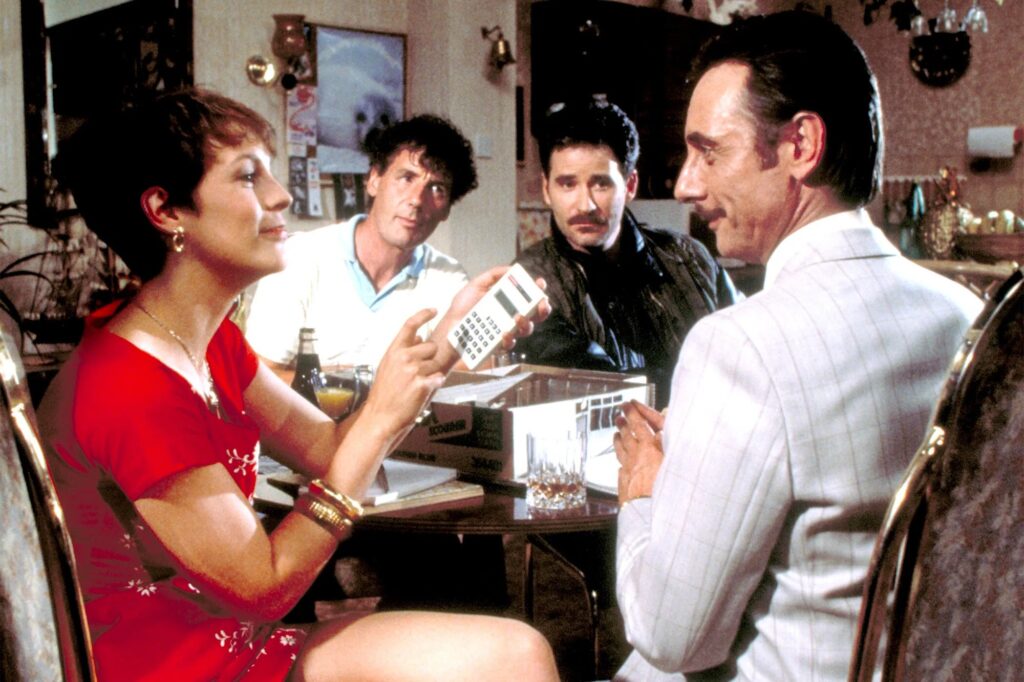
At the core of A Fish Called Wanda’s genius is its ensemble cast. John Cleese, as the bumbling yet cunning barrister Archie Leach, brings a rare combination of intellect and slapstick energy. Cleese’s performance is a masterclass in comedic timing; he can deliver a line with razor-sharp precision, then follow it with physical humor that feels natural rather than forced. His chemistry with Jamie Lee Curtis, who plays the fiercely independent and unpredictable Wanda Gershwitz, is electric. Curtis, known primarily for her roles in horror films before this, demonstrates her exceptional comedic chops, perfectly complementing Cleese’s more restrained but equally absurd persona.
Michael Palin, portraying the mild-mannered animal lover Ken Pile, is a study in understated brilliance. Palin’s Ken is shy, awkward, and obsessively devoted to animals, yet these traits are never played for cheap laughs. Instead, the humor emerges from the genuine discomfort and unpredictability of his character, creating moments that are both hilarious and oddly endearing. Kevin Kline, as the volatile and sexually unpredictable Otto, adds the final touch to this intricate comedic web. Kline’s performance earned him an Academy Award for Best Supporting Actor, and it’s easy to see why. Otto is reckless, egotistical, and absurdly self-assured, and Kline embodies all these contradictions with an intensity that elevates the film from mere farce to comedic art.
Writing That Rewards the Audience
While the cast is undeniably important, the writing of A Fish Called Wanda is what cements its status as a masterpiece. The script is a finely tuned mechanism, where every line, pause, and glance serves a purpose. John Cleese’s writing is brilliant because it respects the audience’s intelligence while also embracing absurdity. The humor is never gratuitous; it emerges organically from character interactions and situations.Even audiences accustomed to everyday essentials like winter apparel can appreciate how A Fish Called Wanda’s carefully constructed writing proves that true craftsmanship lies in thoughtful detail rather than excess.
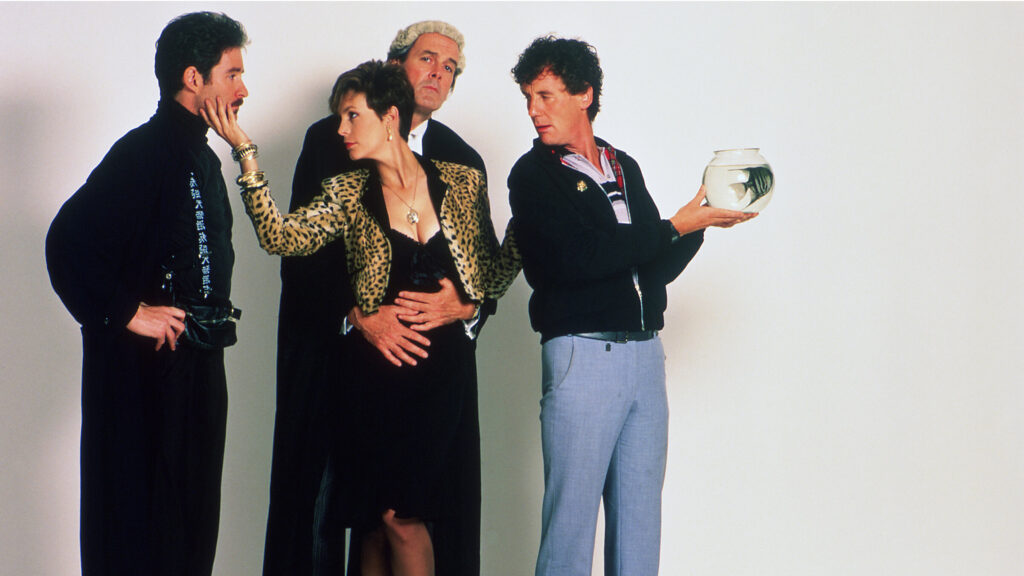
Take, for instance, the scenes involving Ken’s inability to kill a goldfish. The premise is simple, yet the execution is genius. Each attempt, each blunder, builds tension while simultaneously heightening the comedy. It’s not just about the slapstick; it’s about the anticipation and the audience’s connection to a character who is inherently empathetic. This is the kind of layered writing that allows the film to be both uproariously funny and emotionally resonant.
Comedy Through Contrast
One of the most remarkable aspects of A Fish Called Wanda is its ability to juxtapose extreme personalities and let the tension between them generate humor. Archie’s measured, almost neurotic control contrasts perfectly with Otto’s chaotic bravado. Wanda’s manipulative cunning sits somewhere in the middle, exploiting both men’s weaknesses for her own gain. The collisions between these personalities create a domino effect of escalating absurdity, where even minor misunderstandings spiral into elaborate comedic set pieces.
The film also thrives on contrast between British and American comedic sensibilities. Archie’s dry, precise British wit contrasts with the over-the-top, physical humor often embodied by Otto and Wanda. This cultural tension enhances the comedy rather than diluting it, giving the film a unique flavor that feels both sophisticated and delightfully anarchic. The humor is rooted in character and culture simultaneously, which is a rare achievement in the realm of international comedy.Much like a mobile notary brings order and validation to otherwise chaotic exchanges, the film’s sharp contrasts in personality and culture authenticate the comedy, turning conflict and misunderstanding into a perfectly timed chain of humor.
Physical Comedy and Timing
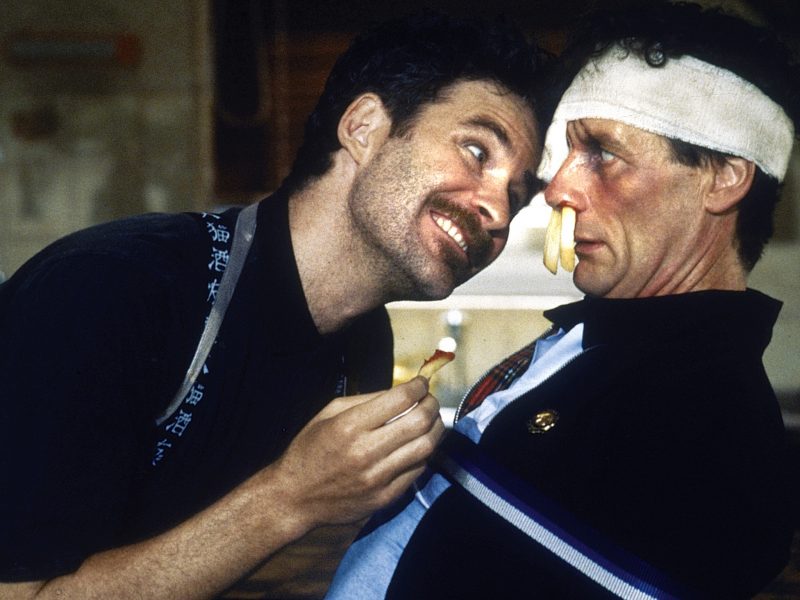
Physical comedy is an art in itself, and A Fish Called Wanda demonstrates it with surgical precision. The scene in which Otto suffers a series of increasingly absurd injuries is a highlight of the film’s ability to combine pain, surprise, and timing into an unforgettable comedic sequence. Unlike many slapstick attempts that feel forced, this film makes the physicality feel inevitable. Each accident feels like a natural consequence of Otto’s personality and actions, rather than a contrived joke, which allows the audience to laugh freely without feeling manipulated.
John Cleese’s physical comedy is equally brilliant. His expressions, postures, and subtle movements convey volumes of emotion and thought without a word being spoken. It’s a reminder that true comedy isn’t just in what is said, but in how it is embodied.In much the same way window renovation in NJ refreshes a space by revealing clarity beneath outdated surfaces, the film’s physical comedy strips humor down to its essentials, letting timing, movement, and consequence shine with clean, unobstructed precision.
Subversive Themes Beneath the Laughter
Beyond the laughs, A Fish Called Wanda engages with themes that remain surprisingly relevant. The film satirizes greed, manipulation, and the absurdity of human ambition, all within the framework of a heist plot. Each character represents a different aspect of human folly: Archie’s arrogance cloaked in sophistication, Otto’s impulsive overconfidence, Wanda’s calculating charm, and Ken’s obsessive conscientiousness. The comedy arises not merely from the situations they find themselves in, but from the way these human flaws are magnified to absurd extremes.
Moreover, the film cleverly subverts traditional gender dynamics in comedy. Wanda is unapologetically sexual, intelligent, and manipulative, steering much of the plot through her schemes. Her character challenges the audience’s expectations and provides a depth that elevates the story beyond a simple caper.
Timelessness and Cultural Impact
What is remarkable about A Fish Called Wanda is how well it has aged. Modern audiences, accustomed to rapid-fire digital humor and CGI spectacles, still find joy in its careful construction, its emphasis on character, and its intelligent writing. The film’s jokes rely on timing, subtlety, and human nature—elements that remain evergreen.
The cultural impact of the film cannot be overstated. It introduced a new standard for heist comedies, inspiring countless filmmakers and comedians to balance smart writing with physical comedy. Its influence is seen in films that attempt to blend absurdity with narrative precision, though few have matched its brilliance. Moreover, Kevin Kline’s Otto remains a reference point for actors seeking to portray chaos with charisma, while Cleese’s Archie is frequently cited as an exemplar of restrained, intelligent comedy.
The Musical Score and Atmosphere
Even elements like the musical score, composed by John Du Prez, contribute to the film’s comedic brilliance. The music punctuates jokes and heightens tension without ever overwhelming the narrative. The soundtrack’s playful undertones often mirror the characters’ antics, creating an additional layer of humor that enhances the audience’s experience. Combined with the film’s elegant cinematography and tight editing, the atmosphere becomes a playground where comedy can unfold naturally.
Legacy of a Comedy Masterpiece
Decades after its release, A Fish Called Wanda remains a masterclass in comedic filmmaking. It proves that humor does not need to rely on shock value or cheap gags; instead, comedy can be deeply intelligent, emotionally resonant, and brilliantly chaotic all at once. The interplay between writing, performance, timing, and character development is so seamless that it feels effortless, yet this is the mark of true craftsmanship.
The film also serves as a reminder that comedy can explore human nature with sophistication. Through exaggerated personalities, clever dialogue, and meticulously staged situations, it exposes universal truths about greed, desire, and the unpredictability of human behavior. This depth ensures that each viewing offers new insights and fresh laughs, a rare quality that cements the film’s status as a timeless classic.
Conclusion
A Fish Called Wanda is more than just a funny movie; it is a carefully constructed comedy of mischief that has stood the test of time. Its genius lies in the combination of extraordinary performances, razor-sharp writing, masterful timing, and a fearless embrace of absurdity. From Cleese’s meticulous control to Kline’s chaotic energy, from Curtis’s manipulative brilliance to Palin’s understated charm, every element of the film contributes to a symphony of laughter that continues to captivate audiences.
The film remains a touchstone for filmmakers, actors, and comedy enthusiasts, demonstrating that true humor is both intelligent and heartfelt. By blending crime, romance, and chaos into a coherent, endlessly funny story, A Fish Called Wanda reminds us that the best comedies are those that respect their audience, celebrate human folly, and never shy away from the exquisite art of mischief. Its brilliance lies not just in the laughs it generates, but in the timeless joy of witnessing chaos executed with precision, and intelligence married to pure comedic instinct. In the world of film, few comedies have achieved this balance, making A Fish Called Wanda not just a classic, but a masterpiece that will continue to enchant and amuse for generations to come.Much like a trusted fence company in Tennessee brings structure and balance to a property without stifling its character, A Fish Called Wanda masterfully contains chaos within a precise framework, allowing its wild humor to flourish without ever losing cohesion or charm.